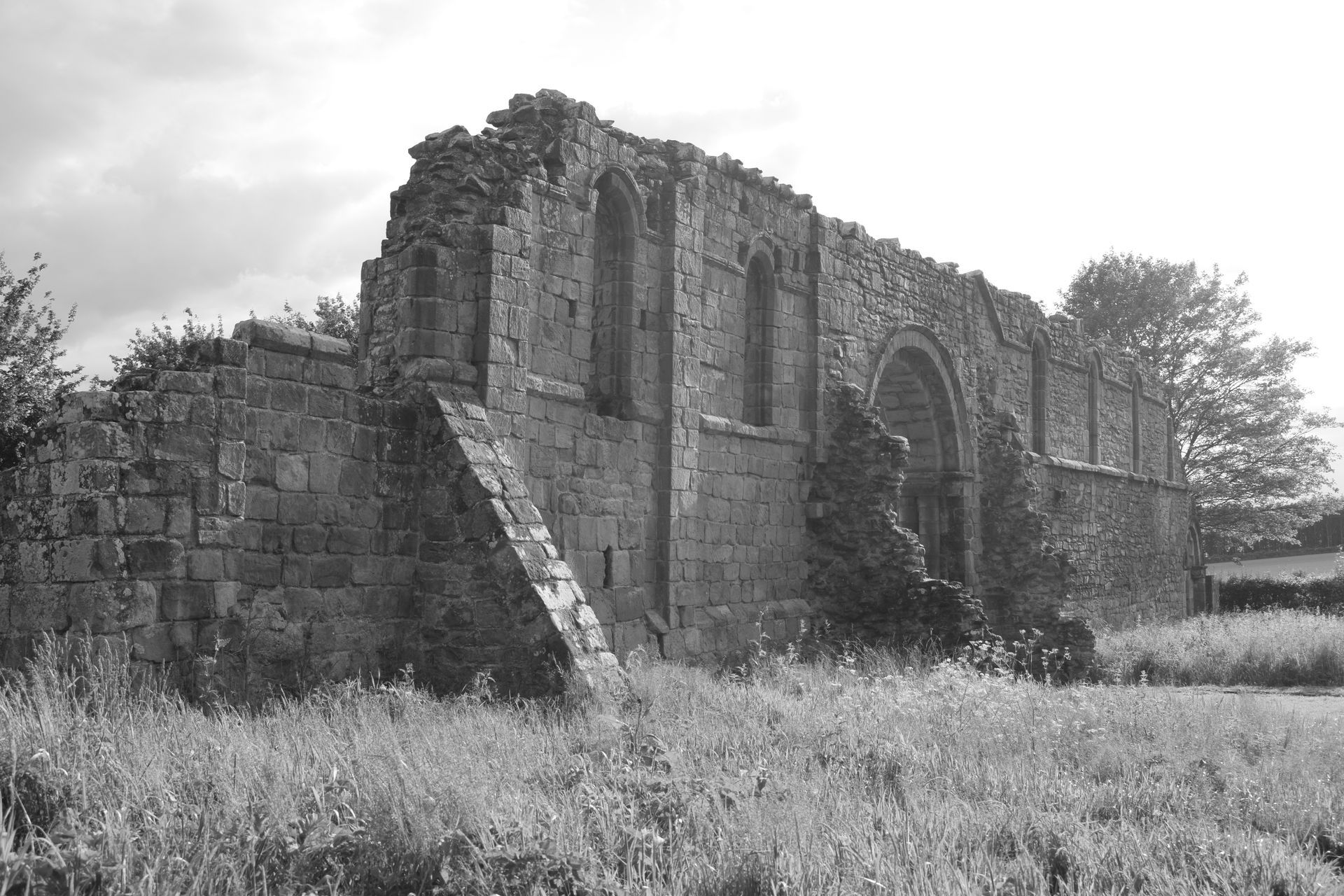
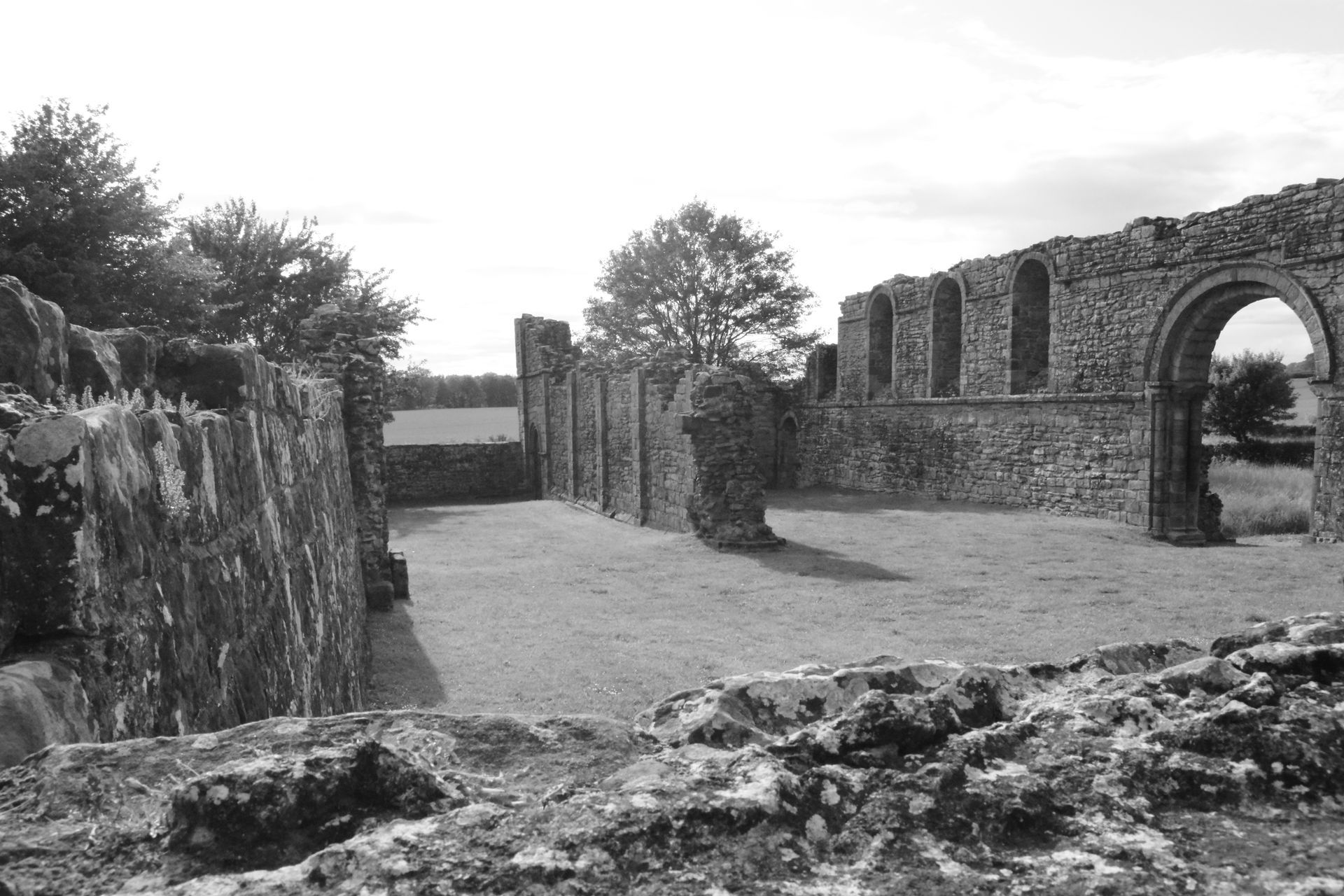
An interesting and eerie place I’ve had the pleasure to visit is White Ladies Priory in the Shropshire countryside. This is a set of ruins of a medieval convent that dates from the twelfth century, although there is evidence to suggest that this was a religious place long before the Norman invasion of 1066.
I’ve always thought that the name White Ladies has a suitably ghostly feel. However, the most likely explanation for the name is quite simple. The nuns who lived here were well known for their white robes. They probably couldn’t afford or didn’t think it necessary to dye their habits black as in most other convents.
There is another couple of explanations for the name “White Ladies” which are much more interesting.
One tale is connected to the legend of King Arthur. After Arthur’s death his queen, Guinevere, hid away from the world and became a nun. Her final home was a poor and little known convent which eventually became known as The White Lady’s Priory.
The name Guinevere is derived from the language of the ancient Britons and means “white spirit”. Another ‘White Lady’ connected to the priory is a statue of the Virgin Mary. This statue was supposed to have stood in the middle of the priory for centuries and was revered by the nuns. It was made of fine white marble and was believed to have miraculous powers. Whenever terrible things were about to happen – deaths, wars, famines – the statue was said to have glowed with a shining, golden light. This was a warning to give the nuns time to prepare.
Legend has it that the last time this statue glowed was in the early 1530’s shortly before the priory was closed down. In 1536 Henry the Eighth’s soldiers arrived to kick the nuns out and steal all their valuables to take back to the King. The glowing statue, however, had disappeared.
It is thought that the statue ended up at St Mary’s church in the nearby village of Brewood. But sadly this statue is not made of fine, white marble and is not known to glow in times of trouble.
 After the nuns were evicted, the Priory became a private residence. At the time of the English Civil War it was owned by a wealthy landowner called Charles Giffard who also owned Boscobel House just down the road.
Cromwell’s patrols were all around and the King was forced to spend an undignified night hiding in an oak tree. (This is why so many pubs have the name Royal Oak.)
The following day the King was hurriedly whisked into Boscobel House where he was hidden in a priest hole. He could hear Cromwell’s soldiers outside threatening immediate execution to anybody who helped the King. Fortunately, everybody managed to keep their nerve and Charles eventually managed to escape to the safety of France. He was restored to his throne a few years later and those who helped him were handsomely rewarded.
White Ladies Priory definitely has a ghostly presence around it. The people who built these places didn’t just buy a piece of land and begin laying bricks. They searched for special places that they thought were spiritual enough to build a house of worship. White Ladies Priory, with its legendary queens, lucky kings, and glowing statues is such a place.
BLOGS